A custom design begins with a brief, and the brief decides most of the outcome. The design team does not need you to describe a design. It needs you to describe the day, the people who will be in the room, and the things you will not budge on. Three points to know before you start: custom design is on the Excellence plan only, and everyone on another plan sees an upgrade card where the brief form would be. The invitation the team builds is then read-only in the editor, because they build it and they update it for you. And if you change your mind, you can have your money back up until the team starts drawing, not after.
Describe the day, not the design
Most briefs open with adjectives. Elegant, timeless, minimal but warm. Those words mean something different to everyone who reads them, so they do very little work. What does work is a plain description of the event.
Say where it is and at what hour. A garden at four in the afternoon and a hotel ballroom at eight in the evening are not the same invitation. Say whether it is one event or several, and whether the same people are coming to all of them. Say who the invitation has to satisfy: if your grandmother reads it before anyone else does, that is a constraint, not a detail. Say which languages and scripts appear on it, and what each family would call the day.
A designer can turn all of that into a look. Nobody can turn “elegant” into anything except a guess.
What to put in the brief
The brief form asks for a set of things. Only two are compulsory, the project name and the vision, and the vision will not submit until you have written a few sentences into it. Everywhere else a blank is a real answer.
- A project name, so you recognise it in a list later. Your names, the place, the month.
- Your vision. The longest field and the one that carries the design. The venue, the hour, the traditions you are keeping and the ones you are dropping, the song that will be playing when guests walk in.
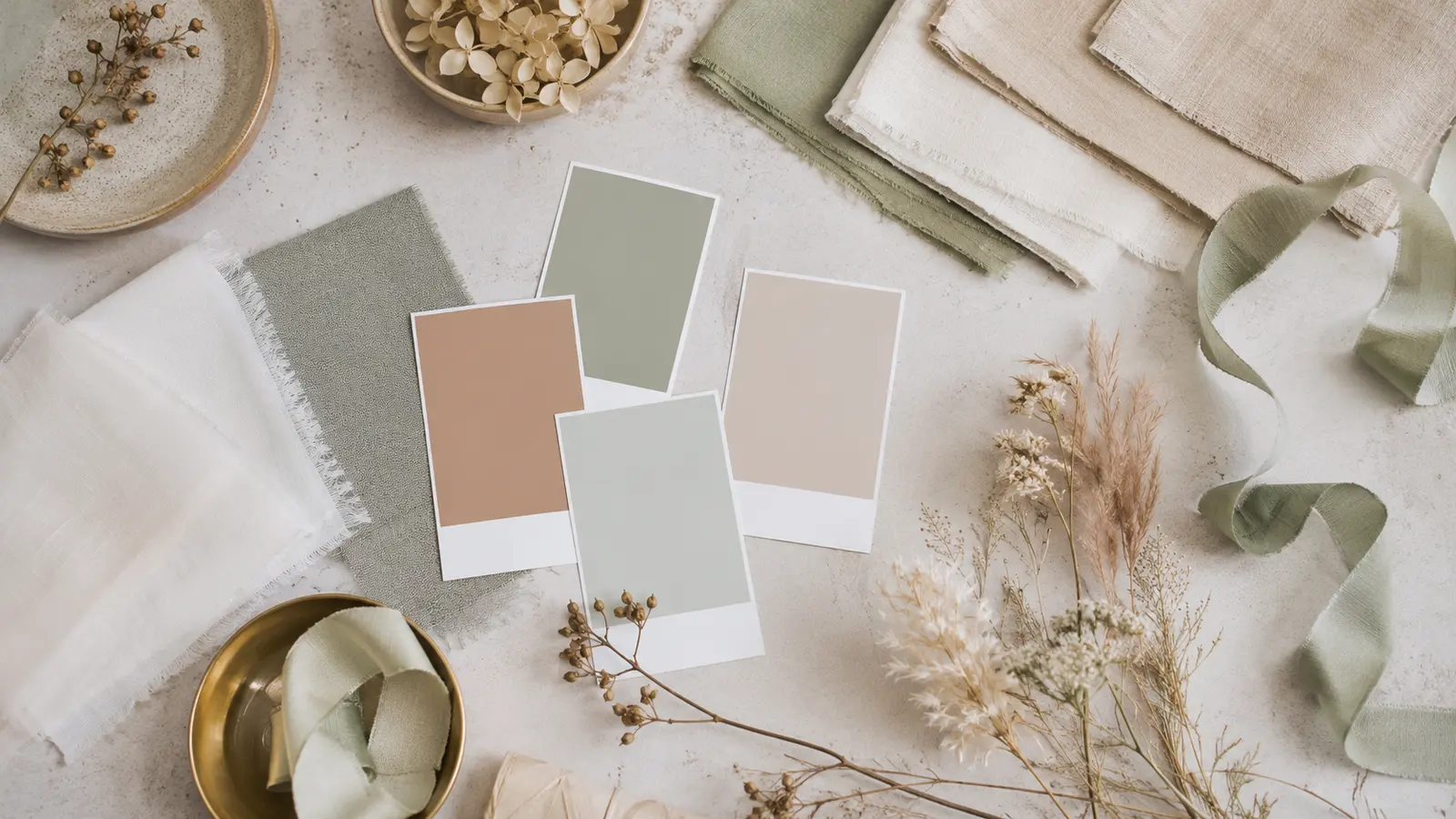
- Colours. Up to four, taken from something real if you can: the fabric, the flowers, the invitation your mother kept.
- A font feel. Serif, script, modern sans-serif, handwritten, or no preference at all. No preference is not laziness; it hands the lettering to the team.
- Reference links, up to five. Pinterest boards, other invitations, a post you saved.
- Inspiration images, up to four. Photographs of fabric, flowers, or the venue at the hour your guests will see it.
- The date you want the finished design in hand.
- Must have, and please avoid. The two shortest fields, and the ones that save the most work.
References only help when you say why
A saved board tells the team you have taste. It does not tell them which part you are pointing at. The same image can be a reference for its colour, its paper, the way the names sit at the top, or the restraint of it, and each of those leads to a different invitation.
So write the reason next to the link. This one for the way the names are set, not the colours. This one for the texture, ignore the layout. This one because my sister had something like it and I want the same family of thing. A few references with reasons attached beat a whole board without them.
Say what you do not want
The avoid field is the one couples leave blank, and it is often the most useful thing in the brief. You may not know what you want. You almost certainly know what you dislike. No gold. No doves. Nothing that looks like a nightclub flyer. Not as traditional as my cousin’s. Dislikes are far cheaper to hear before the first draft than after it.
Non-negotiables belong in the same breath. A family crest. A particular verse. Both sets of parents’ names in a specific script. The temple, the church or the venue with its name spelled the way they spell it. Name those at the start, so nobody has to redraw a finished layout around them.
How the custom route differs from editing a design
On a ready-made design you type and watch the invitation change, and the loop is a second long. On the custom route you write, wait, and then reply. The first draft comes back, you respond in the same thread, and the team makes the changes. Slower per change, and usually better per outcome, because someone who does this for a living is holding the pen.
That is also why the editor is closed on a custom invitation: two sets of hands on the same file quietly undo each other. Changing your venue, fixing a spelling, moving the reception time all go to the team as a request instead.
Everything around the design behaves as it does on any other invitation: the guest list, the personal link for each guest, the RSVPs arriving in your dashboard. None of that changes because the design was drawn for you.
When a ready-made design is the better answer
Be honest about where you stand. If you cannot fill in the avoid field, and you have no references, and the colours are whatever looks nice, you do not have a brief yet. You have a hope. A ready-made design will get you further, faster, and you can see it happening while you work. The same is true if what you actually want is a colour change and your own photograph on the cover.
Time is the other test. A custom design travels by reply thread: the brief goes to a person, a first draft comes back, you answer it, and each round takes as long as an exchange of letters takes. Fix the day you want the invitation in your guests’ hands, count backwards through the brief, the draft and the revisions you will ask for, and see whether it still fits. If it does not, a ready-made design now is the calmer choice. The custom brief keeps until you have something to say in it.
Frequently asked questions
Which plan do I need for a custom design?
Excellence, and the first brief comes with the plan. On any other plan, the custom design page shows an upgrade card instead of the brief form. The detail is on the pricing page.
Can I edit the design myself once it is built?
No. A custom design is read-only in the editor, because the team builds and updates it for you. You send the change you want and they make it. If that is the part you dislike, a ready-made design you edit yourself is the better fit.
What if I change my mind after paying?
Up until the team starts drawing, your money can come back. Once work on your design has begun, the payment stands, so the moment to voice a doubt is before you send the brief rather than when the first draft lands. Ask us if you are unsure which side of that line you are on.
Related: Compare the plans · Talk to us